
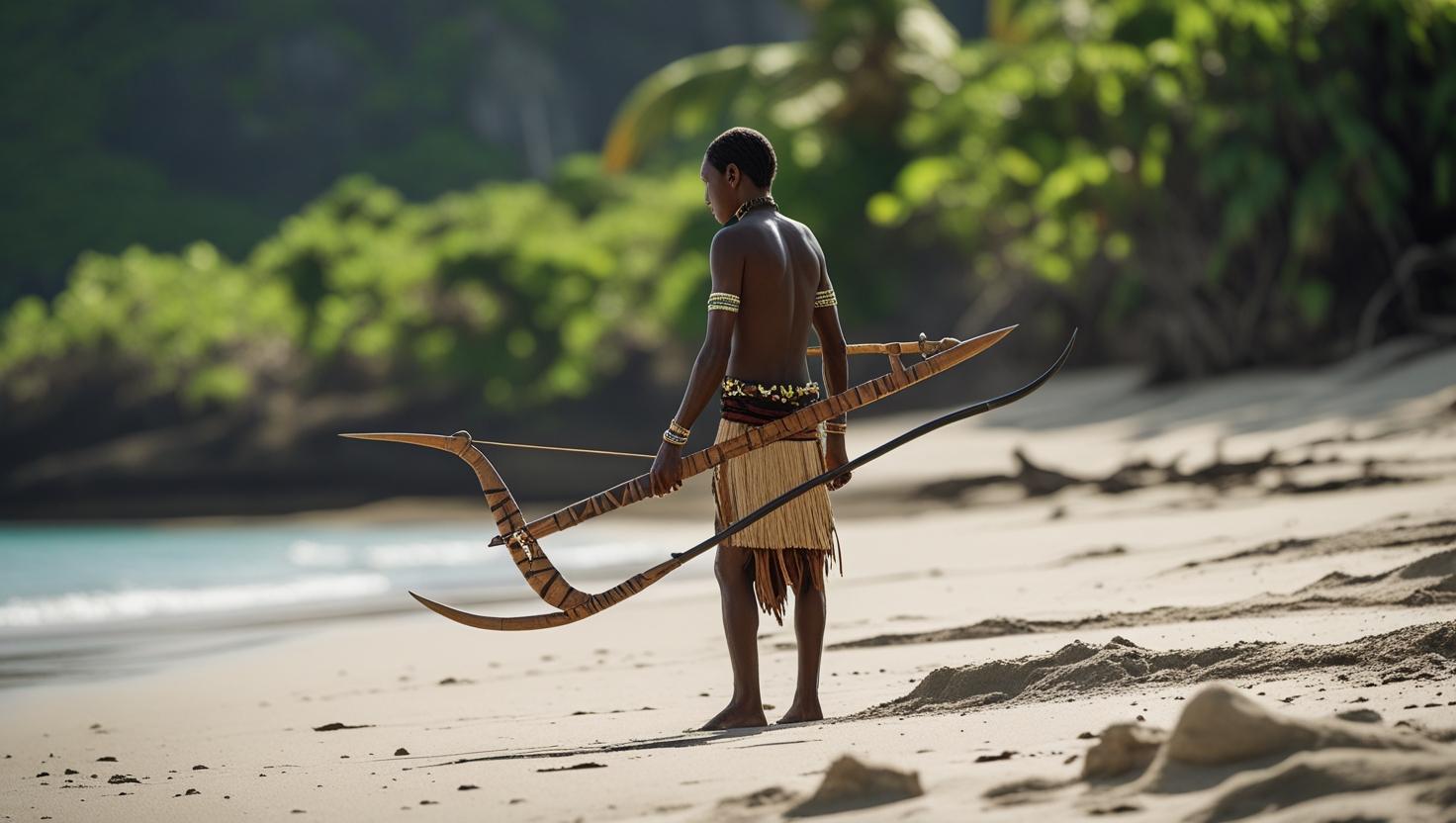
North Sentinel Island is a mysterious and almost completely isolated island located in the Andaman and Nicobar archipelago of the Indian subcontinent, counted among the most isolated and enigmatic places in the world. The island is part of the Andaman archipelago in the Bay of Bengal and administratively part of the Indian Union Territory of Andaman and Nicobar. It measures about 60 square kilometers and is covered with dense, tropical forests, which give it a dark green cover. The coral reef spread around the island makes it extremely difficult to reach this place by sea, there is also no natural harbor, which makes it almost impossible for outsiders to come here.
The most talked about feature of North Sentinel Island is the Sentinelese tribe inhabiting here, who are considered among the last untouched and uncultivated races in the world. The Sentinelese tribe has absolutely no connection to the outside world for various reasons; they are completely isolated from postmodern civilization, technological development, and global culture and have rammed into their enduring way of life for thousands of years. The tribe adopts traditional hunting and gathering livelihoods — they use arrows, bows and spears and are neither in agriculture nor know metallurgy. Their language is yet to be known or classified by any outside anthropologist.
The Indian government declared North Sentinel Island a tribal reserve in 1956 and legally stopped the access of outsiders within about 5 nautical miles of it. Its greatest purpose is to protect the tribe from external infections, as they have not developed any immunity against mainstream dangerous diseases. Despite the pressure of demand, curiosity and tourism, the government imposes maritime patrols around the island to protect them from unwanted intrusions. The Sentinelese tribe often react aggressively to the arrival of outsiders — if a yacht or ocean liner approaches their beach, they attack with arrows and spears. Many of the outsiders who have attempted to forcibly enter the island so far have also been killed. The murders of two fishermen in 2006 and an American missionary in 2018 are also examples of the same reaction.
In recent years, the government has indicated conditional permission to select anthropologists, scientists or explorers for study and research, but the possibility of “risk-free contact” is still far-fetched. Mainstream efforts have so far focused solely on leaving them alone and protecting their human rights and culture. Population estimates of the Sentinelese tribe are not very accurate, yet they are estimated to number between 50 and 150. Calculations through the Indian census, external inspectors or helicopter surveys have also been limited and predictable as no authentic calculations have been possible under their privacy and administrative policy.
From the point of view of geography, the coast of the island is white sandy that stretches as a narrow strip on all four sides. Within is a dense forest, starting from a peak about 20 meters high and reaching a height of 122 meters. During the 2004 Indian Ocean earthquake, the tectonic plate here rose from one to two meters high, exposing large parts of the coral reef and slightly increasing the size of the island. Another small forested island, Constance island, was also located in the coastal areas, but due to geological movements, it has been found in the main island.
North Sentinel Island and its inhabitants remain a mystery to the modern world due to conservation policy. The island is also an attraction for scientists in terms of fauna and flora, but due to the constant aggressive response and legal restrictions, there has not been a solid assessment of biodiversity. From an environmental point of view, the island is extremely healthy and unchanged, where the external interference of man has been minimal so far. The island has been repeatedly discussed in global media in recent years, presenting its privacy and security policy as precedent.
North Sentinel Island remains today one of the most unexplored, most mysterious and completely invisible communities in the world. The Sentinelese living here are evidence of profound self-sufficiency, complete coordination with the environment and unique social structure. Due to government protection and legal restrictions, neither an external civilization has been able to interfere with their way of life, nor has their cultural or biological existence been endangered. This is why North Sentinel Island is still a wonderful mystery for human civilization in time — where the Unique Shadow of nature, culture and human freedom has been preserved until now by preventing the curiosity and intrusion of the outside world.